



30 June 2020 · Press | Media · Courses and classes | Teaching · Articles
EARLY MUSIC EDUCATION IN SPAIN
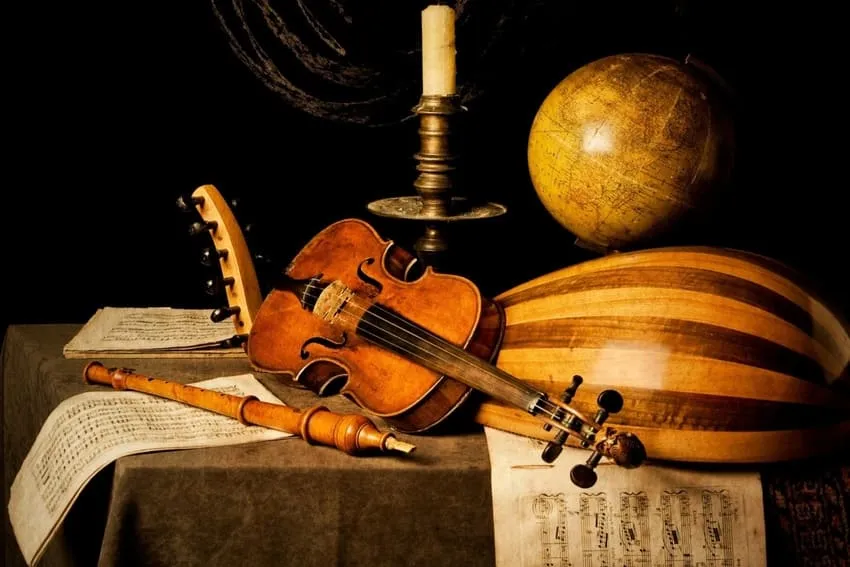
Antonio Narejos interviews Silvia Márquez, Javier Artigas, Anna Margules and Josep Borràs for Melómano Digital about the state of early music teaching in Spain.
We look at the situation of early music in Spanish conservatoires, a specialism that, in the opinion of our four interviewees, is going through a good moment.
ARTICLE
MELÓMANO | 30/06/2020 | Antonio Narejos In many institutions it is now possible to study instruments such as harpsichord, recorder or organ, among others, at both professional and higher levels. As many as eight of our higher conservatoires have an early music department, among them Aragón, Castellón, Castilla y León, ESMUC, Madrid, Murcia, Sevilla and Vigo, although they often have to share space with other specialisms that have little to do with their own field.Within the broad field of what is now called historically informed performance, early music is proving a catalyst for our conservatoires, in musical practice and in research, but also in relation to the rich heritage we have in Spain.
Our guests are four leading figures in education in our country today: the harpsichordist Silvia Márquez, of the Real Conservatorio Superior de Música de Madrid; the organist and harpsichordist Javier Artigas, of the Conservatorio Superior de Música ‘Manuel Massotti Littel’ in Murcia; the recorder player Anna Margules, of the Conservatorio Superior de Música Aragón; and the bassoonist and dulcian player Josep Borràs, of the Escola Superior de Música de Catalunya (ESMUC).
We have asked them for their assessment of the teaching, the professional opportunities open to graduates and the aspects they feel are missing, whether in education or in the artistic, social and cultural spheres.
But before diving into their opinions, here are a few brief brushstrokes from their extensive biographies by way of introduction:
- Silvia Márquez, born in Zaragoza, holds the chair of Harpsichord at the Real Conservatorio Superior de Música de Madrid, after a long teaching career that she combines with her concert activity and the direction of the Murcia-based early music ensemble La Tempestad. Committed to contemporary music, she has given premieres of works by various Spanish and foreign composers. She has recorded two solo albums for the Ibs Classical label, Chaconnerie and Herbania.
- Javier Artigas is Professor of Organ and Harpsichord at the Conservatorio Superior de Música ‘Manuel Massotti Littel’ in Murcia and a guest professor at ESMUC, and teaches at the Curso de Música Antigua de Daroca and the Semaine de l’Orgue Italien in Saorge. Internationally recognised as a specialist in historical Spanish music, his recordings include Tañer con Arte (5 stars Goldberg), Organs in Dialogue with J. Vaz and, with Ministriles de Marsias, Trazos de los Ministriles and Invenciones de glosas (various awards).
- Anna Margules was born in Mexico, where she studied recorder, completing her training in Amsterdam and Porto. She teaches at the Conservatorio Superior de Música de Aragón and at the Universidad Autónoma de Madrid. She has been a member of various ensembles such as PluralEnsemble (20th–21st centuries), Los Músicos del Buen Retiro (17th–18th centuries), Sforzinda (16th century) and, above all, Trio Subtilior (14th century), Intratempo (recorder trio) and La Recisunda (17th to 19th centuries).
- The bassoonist and dulcian player Josep Borràs, born in Terrassa, teaches at ESMUC, where he has also been director and head of the Early Music department. He has worked with some of the most prominent international figures in early music, such as Nicolaus Harnoncourt, Philippe Herrewegue and Jean Claude Malgoire, and currently plays in Jordi Savall's ensembles Hespèrion XXI and Le Concert des Nations. Borràs holds a doctorate in Musicology from the Universitat Autònoma de Barcelona.
Silvia Márquez © Joaquín Clares
Silvia Márquez
The teaching of early music in our country today has nothing to do with what it was twenty-five years ago, and the improvement is visible in many respects: the increase in conservatoires with early music specialisms; the quality of the teaching staff and the presence of fantastic specialists in Spain; and the inclusion in the curricula of absolutely essential subjects (knowledge for which we used to have to ‘fend for ourselves’): basso continuo, instrument making, tuning and temperament, improvisation and ornamentation – it is all so different…! I remember chasing after more than one harpsichordist to teach me basso continuo because we didn't have the subject at the conservatoire, and 80% of a harpsichordist's real work is their role as a continuo player in an ensemble or orchestra. I didn't even know where to begin!
As for career prospects, I also see more opportunities than before. Besides the two traditional paths, becoming a teacher or a concert performer, a conservatoire can produce future managers, programmers, ensembles and freelance musicians, agents, advisers, sound technicians, communication and specialised marketing professionals, instrument makers and luthiers, record producers, magazine editors, critics, popularisers, cultural facilitators, musicologists, researchers… Mentalities have changed too, and it is obvious that you cannot wait for offers to rain down on you, but must start from a proactive attitude.
I believe early music is the most important example in our country of the phenomenon of musical entrepreneurship. I don't mean great musicians and soloists with agents, but ensembles that seek constant activity and manage themselves. When we started with the ensemble La Tempestad twenty years ago, there were few early music initiatives. Of course, Jordi Savall as a pioneer in this respect, Eduardo López Banzo with Al Ayre Español and, years later, Forma Antiqva and Accademia del Piacere, among others, but the network of young, dynamic ensembles today is admirable. Proof of this is the founding in 2010 of GEMA, Asociación de Grupos Españoles de Música Antigua, which brings together more than 60 ensembles. The activity of these ensembles has itself led to the creation of new series and festivals. I know of no similar flowering in other fields of classical music.
But, on the other hand, we have had decades of bad habits and neglect of music as heritage and cultural necessity, and I think large-scale action is needed. I am as pessimistic in my view as I am optimistic about the solution. I have been saying it in my circles for some time: it is a dream, but not an impossible one. We need a National Music Plan, just as the national plans to promote reading emerged in the 20th century and remain in force, with excellent results. In this way a true national network would be formed with a common goal and united efforts, which would absorb all the professionals graduating from conservatoires, while at the same time creating the need for all the other music professionals mentioned above.
Javier Artigas, organ and harpsichord
The teaching of early music in our country is at present, we might say, in acceptably good health. It is possible that in recent years the number of enrolled students has dropped slightly, but we should not forget that following the introduction of specialisms in specific historical instruments there was a boom. This was due to the need to regularise the qualifications of a whole series of people who had taken courses which at the time did not lead to a qualification. Enrolment has since returned to normal.
Likewise, the training currently offered to students is of an excellent standard. The teaching staff are sufficiently qualified both artistically and as teachers. Perhaps I would say we still need to address the shortage of material resources that the Administration provides to the institutions: the lack of a stock of instruments and the fact that not all early instrument specialisms are offered. At the very least, every institution would need the basic continuo specialisms (cello, harpsichord, organ and plucked string instruments), together with some of the other specialisms, including Renaissance and baroque singing.
We are at a moment when the economic crisis has swept away a good part of the cultural fabric that had grown very large in the years immediately before this period. From the point of view of entering the concert world, this has been terrible for graduates. Naturally, teaching is another path, but it too is fraught with thorns because of the already mentioned shortage of posts in the higher conservatoires. We shall have to wait for the education authorities to regularise these specialisms, and even to aim at completing the staffing in the institutions that offer them.
To give an impetus in the educational sphere, alongside the creation of early music departments that included the organ, highly attractive projects could be offered to students. It would also allow us to broaden the repertoire, making it possible to envisage the study and performance of Renaissance and baroque music and even of the Classical period. The creation of specialised master's degrees in the performance of Hispanic music and the recovery of musical heritage would also be a great spur.
It would be desirable to create youth orchestras with original instruments, which could be the seed of later instrumental ensembles that would make the leap to professional status. By recovering the heritage specific to each autonomous community, a breeding ground could be generated in society to support this kind of teaching.
As a Professor of Organ with thirty years of experience, I would like to draw attention to the lack of care shown by the education authorities towards this very ‘special’ specialism. I understand that it is difficult to make the needs of organ teaching understood when enrolment in this instrument is usually low, or scarce. But it is absolutely necessary that they understand that an instrument with specific characteristics is needed in order to teach this subject in conditions that are not merely decent but minimal. The repertoire studied requires an instrument that costs a great deal of money, but perhaps the problem is not the cost of the instrument itself, but what comes afterwards: maintenance. This lack of foresight means that the investment made, with great effort, is almost entirely lost after a few years and it becomes necessary to make another.
Anna Margules © Michal Novak
Anna Margules, recorder
Since I arrived in Spain in 1995, the standard of early music teaching has improved considerably. Many people left to continue their studies in other parts of Europe (Holland, England, Germany…) and have come back. Both musicians of more or less my generation and students already trained by us have made that round trip. Now the network of people born here and of those of us who have stayed in this country and are part of its cultural wealth means that early music teaching continues to develop.
This has translated into a good instrumental and vocal standard, which can be seen in the early music ensembles that exist in Spain, and in the level of teaching in several conservatoires. In addition, audiences have increasingly come to enjoy listening to this kind of repertoire.
I see, however, that we still have a long way to go in conveying a truly historically informed vision, so we keep working on it! And almost all the teaching is still concentrated on baroque music, little on the Renaissance and almost nothing on the medieval period.
On the other hand, the number of institutions where our specialisms are taught has hardly increased since I arrived. Their inclusion in music schools, and in the elementary and professional levels of education, should be promoted much more, so that more students would then reach the higher level.
Playing, creating, researching, teaching. That is what it is about, and it is no easy task. The battle to find a place and stay in the world of music, and of the arts in general, is arduous. It always depends on first understanding what kind of musician you want to be and are, what level you have, whether or not you have a personal project as a performer, and how well you know how to move in the context in which you happen to live.
I think there would have to be genuine political will, both on the part of the management teams of the various institutions and of the competent authorities, to promote the creation of real early music departments, with not just one or two instruments but a strong organic structure. To this should be added the review and implementation of curricula in many of our conservatoires so that they are consistent with what so many of us try to communicate to our students. I know that we have tried on several occasions, but the chain has broken at some point and it has not always been possible to succeed. I can also vouch that when support has been given, it has borne very good fruit. And then perhaps I would add a subject on self-management. There should also be much more communication (through meetings, advertising, social media outreach, etc.) between conservatoires of different levels (we are doing this in Aragón and it is already showing) and from conservatoires outwards, so that people understand that what is done inside enriches the cultural life of their city or town.
I look at so-called early music from my present, that is, for me early music is as contemporary as any other. I also believe that performing contemporary music on these instruments (in my case, the recorder) is crucial if we are to keep developing both technically and instrumentally, and to continue expanding our repertoire. Early and contemporary music complement each other completely.
Josep Borràs, bassoon and dulcian
The first manifestations of teaching took place in the summer courses from the late 1970s (Daroca, La Seu d’Urgell, El Escorial, etc.). These courses, which brought in soloists (mostly foreign) from various specialisms, had (and still have) an important effect on a whole generation, leading many of us to move to specialised centres such as Basel, The Hague or Amsterdam, partly on the advice of a number of leading teachers in this field, such as Romà Escalas or José Luís González Uriol. Following the LOGSE decree, some Spanish conservatoires took on more instruments besides the harpsichord, organ and recorder, namely the viola da gamba and plucked strings, instruments that did not ‘contaminate’ the orchestral specialisms and the piano.
In 2001 ESMUC was created with a very open philosophy that aims to cover as many specialisms as possible and to attract types of student who have already opted to be ‘specialists’ or who want to enter early music through its complementarity with other fields (classical, jazz, traditional, musicology…). In addition, since 2011, together with the Musicology department of the Universitat Autònoma de Barcelona, it has been possible to take the Máster Universitario de Interpretación de la Música Antigua. in the opinion of our four interviewees,
Measures are urgently needed to provide more resources, such as instrument banks (a formula that has been very successful in France) in order to facilitate and standardise this kind of teaching. There could also be youth orchestras (like JONDE) that would bring students together and undertake significant projects, especially of Spanish music. In the field of early music, research is also fundamental and, in this respect, agreements should be promoted with universities, the CSIC, etc., and R&D agreements based on the new performative research should be considered.
I would like to comment on the early music ‘master's effect’, since this is becoming the preferred route for applicants from other instrumental specialisms in most European institutions, to the detriment of the Higher Degree or Bachelor's in their own instruments, prioritising the ‘qualification’ over the epistemology of the studies. This issue, which is giving uneven indicators, is currently under discussion in the European higher education area.
Looking at how audiences have come to accept early music, its close relationship with heritage becomes evident. England, France and Germany have known how to combine the international repertoire with the recovery of each country's own. In this respect, Spanish music is still the great unknown, despite having composers such as Cabezón, Victoria, Guerrero, Morales, Hidalgo, Cererols, Durón, Nebra, Valls, Sor, Martín y Soler, etc. On the other hand, it would be advisable to recover and reclaim the distinct sound worlds that are proper to this music, especially polychoral writing and the use of the ministriles, which lasted well into the 18th century.
As an anecdote, in 1981, when I went to study in Basel as a bassoonist, I became interested in the old Spanish dulcians, instruments essential in chapel ensembles to support the voices. The official answer was that no instruments survived beyond those known in Brussels from the Barbieri collection. I was also told that there was almost no repertoire. When I returned to Spain, together with the French maker Laurent Verjat we had the privilege of seeing in their context ‘new’ instruments that kept appearing, up to a total of 28 across the Peninsula. We also confirmed the existence of a genuine School of instrument making, essential for the music of the 16th and 17th centuries.
LINKS
Article in Melómano Digital: The teaching of early music in Spain