



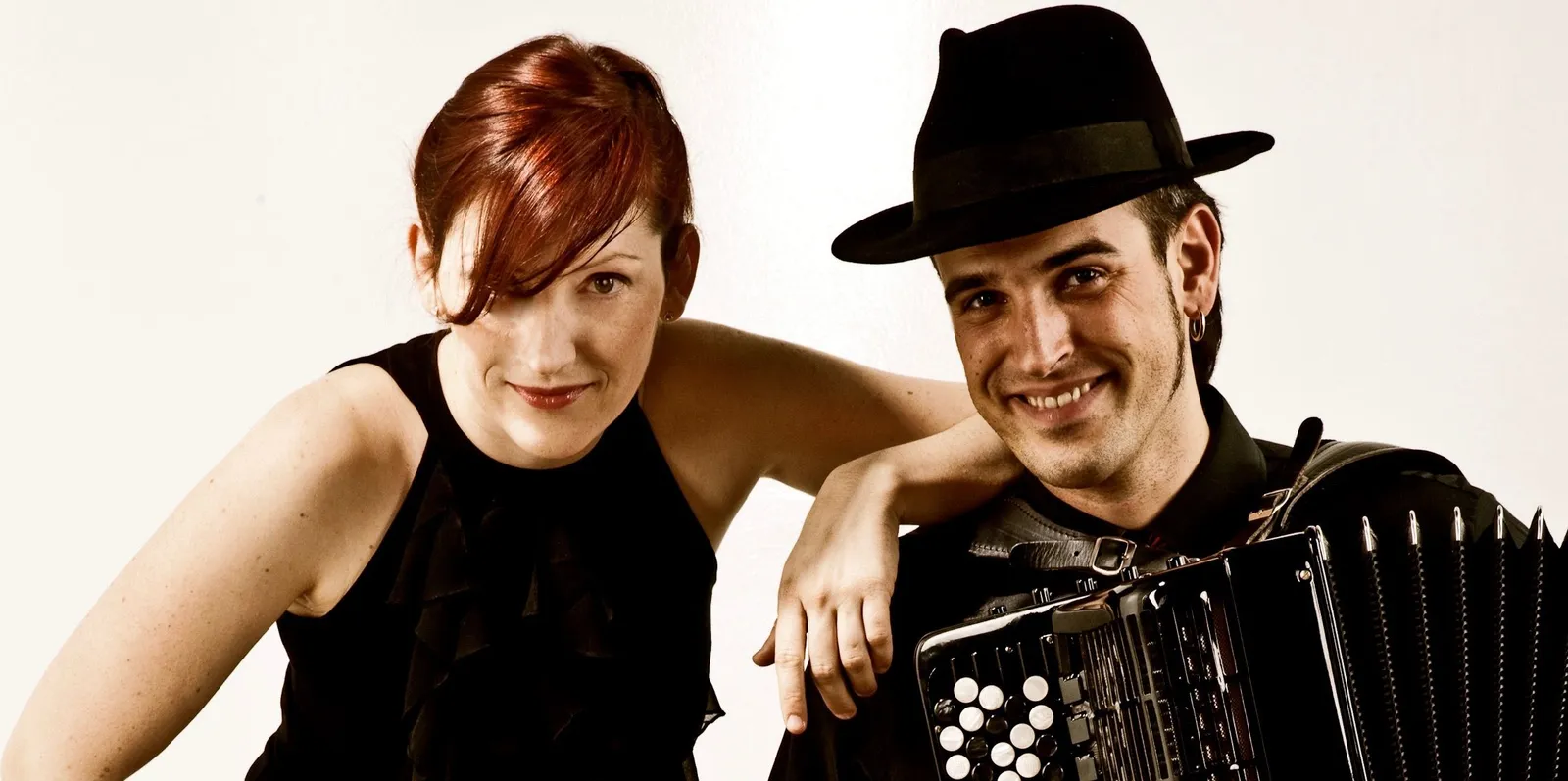
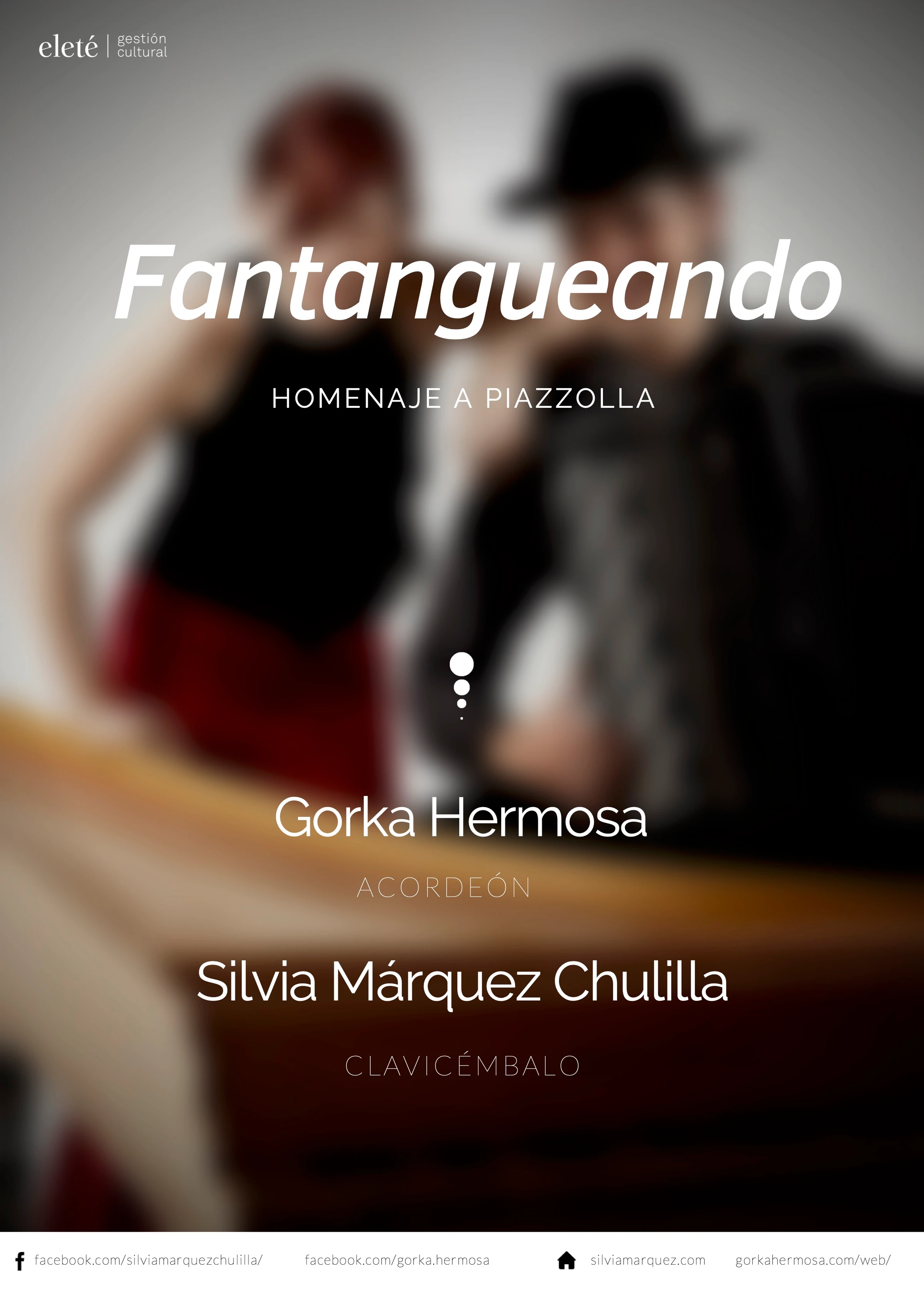
FANTANGUEANDO
TRIBUTE TO PIAZZOLLA
GORKA HERMOSA | ACCORDION
SILVIA MÁRQUEZ CHULILLA | HARPSICHORD
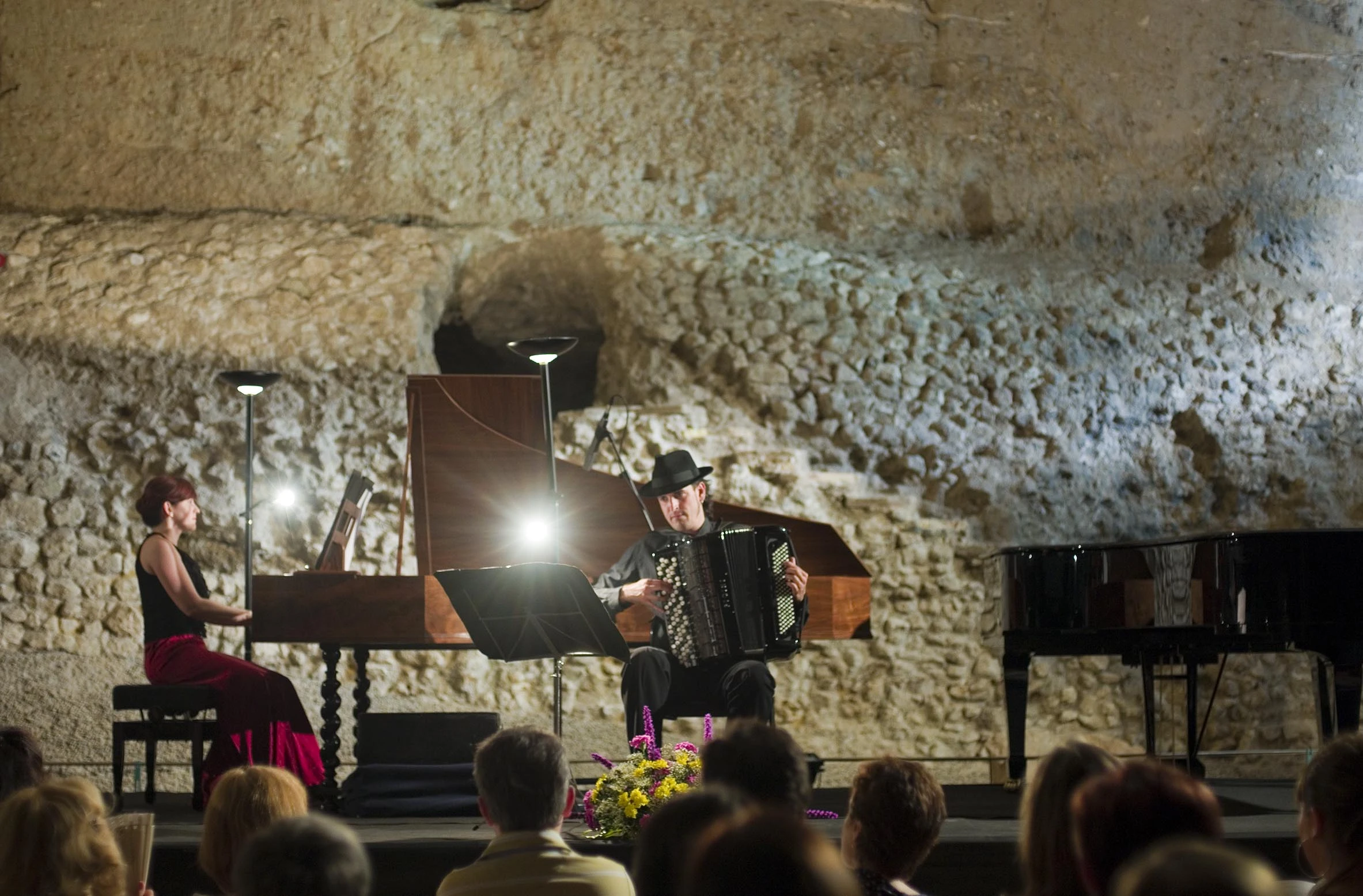
Fantangueando is a thread of dance stitched together with fantasy and sensuality. Fantango is a play on words, an optical illusion like so many others from that Quixote who crossed borders: a tango rhythm hidden beneath the fantasy.
Milonga del viento - Gorka hermosa y Timo Lechvien
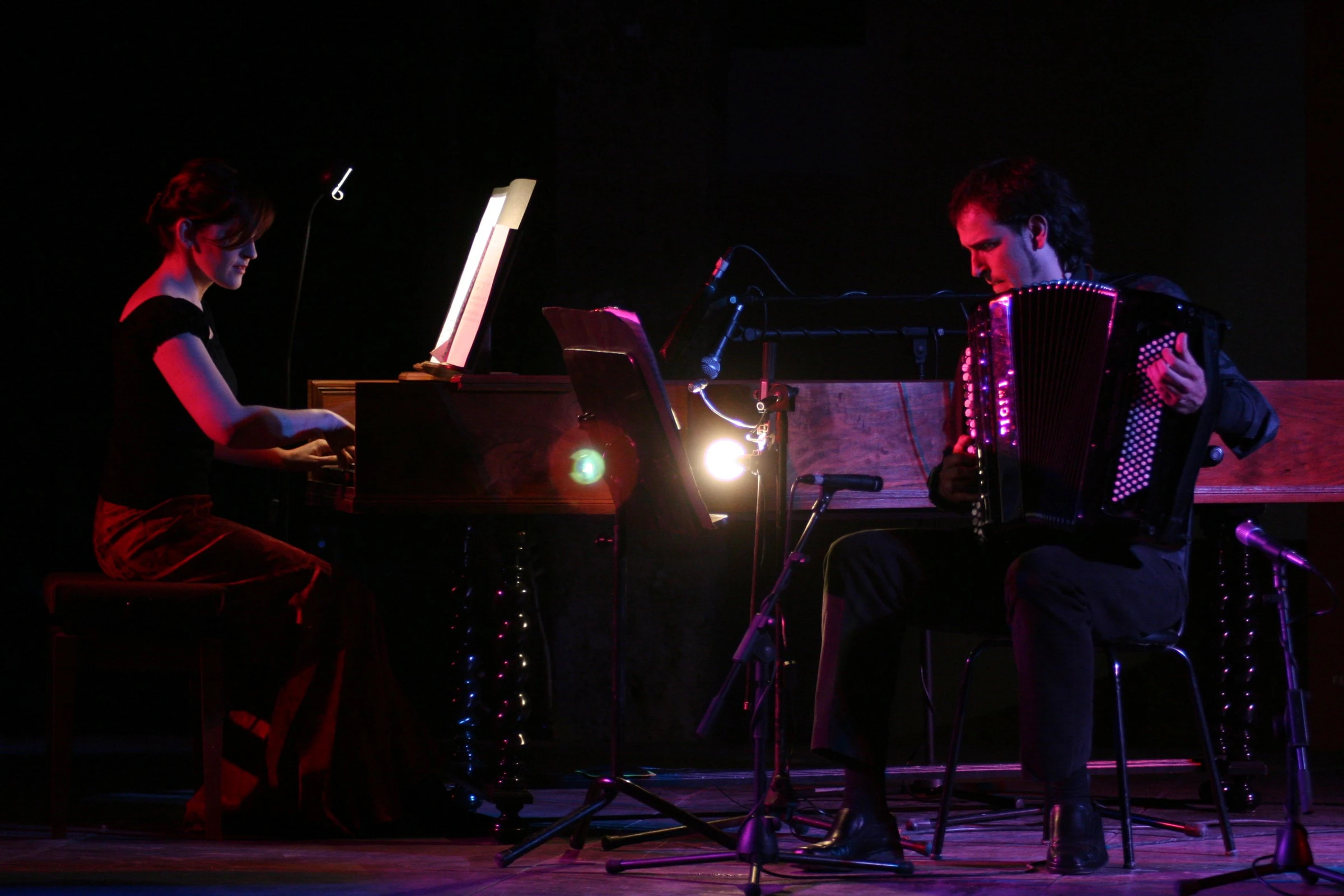
«Fitting marriages […]. An original and bizarre combination […]. The instrumental marriage seemed extraordinarily unusual but it worked, thanks to two fine musicians who took a risk.»
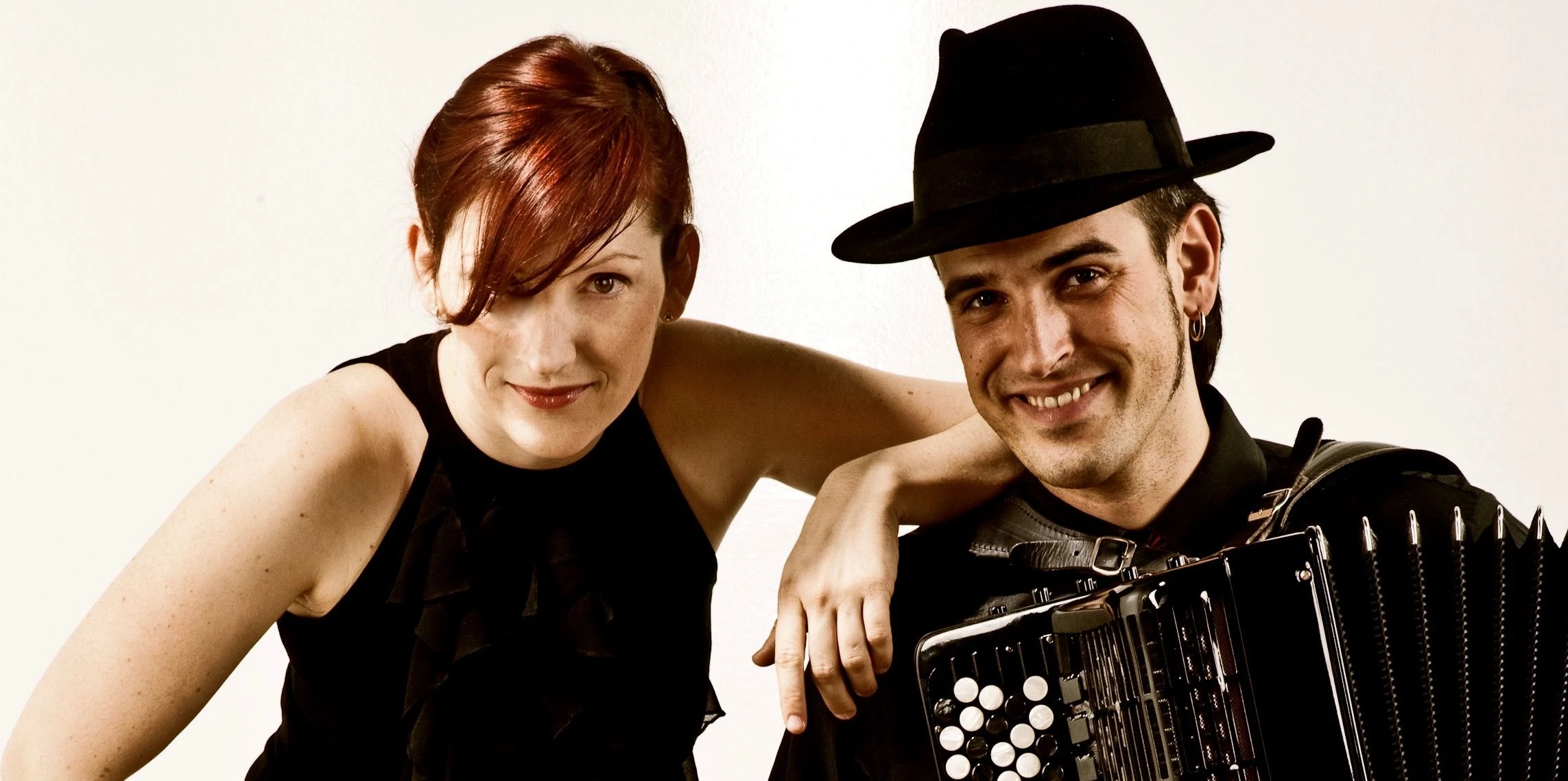
Having made its debut at the Festival Internacional de Música y Danza de Granada, Fantangueando (harpsichord and accordion) is a daring venture that sinks its roots into Spanish folklore and carries flavours from across the ocean. Fandango, bulerías, tango... baroque sonorities and contemporary writing, new and old instruments blending in a programme full of rhythm. A fusion of two bodies, two cultures, two musics... it moves beneath the constant rhythm that insists without mercy... like Baudelaire's famous line: under the yoke of pleasure, that merciless torture...
With Tango-Fusion we remain in the Hispanic world, but over there, in Buenos Aires, the homeland of tango. At the request of Elisabeth Chojnacka, Yves Prin, one of the composers most open to the musics of the world, responds by pairing the harpsichord with the bandoneon, the irreplaceable soul of Argentine tango, in what has become a “grandiose and tragic fresco” to the glory of Eros and Thanatos. Infused with every element of tango (pulse, rhythm, melodic ruptures), it was inevitable that the ghost of Astor Piazzolla would appear. Dry, incisive rhythms and melodic lyricism, whose expression at times approaches the very edge of violence.
Beneath it all, forever unchanging, is dance, as Horacio Ferrer sketches it in the lyrics of Libertango:
“My freedom is tango flung wide open, and it is blues and cueca and choro, danzón and romancero. My freedom is tango that dances in ten thousand ports, and it is rock, malambo and psalm, and it is opera and flamenco”.
Artistic details
Accordion | GORKA HERMOSA
Harpsichord | SILVIA MÁRQUEZ CHULILLA
Production | MARIVIC MARTÍN
Technical coordination | ANTONIO CLARES
Technical specifications
Audience: general
Duration: approx. 65 minutes, without interval
TECHNICAL REQUIREMENTS:
Although a fully acoustic version is possible where venues have no access to a power supply, it is preferable to have one in order to balance the sound characteristics of the two instruments. Production requirements will be agreed with the organiser after examining the proposed venues (which may be open-air), taking into account the following points:
To be provided by the organiser:
Loading and unloading staff
Lighting (to be determined according to the characteristics of the space)
1 armless chair or adjustable piano stool (for the accordionist)
Amplification system (not essential; it will depend on the acoustic conditions of the venue)
Sound technician, if the previous point is required
At least 2 dressing rooms (or equipped spaces, with toilet and towels). In any case, sufficient dressing rooms, depending on the number of performers in the programme
Water
Table or stand for the sale of albums (CDs)
Complimentary tickets: 2 per performer + 1
Provided by the company:
Keyboard instrument: Klinkamer two-manual harpsichord with F-f’’’ range, Labréche model after the original in the Stuttgart Museum
Insurance, transport and tuning of the instrument
DPA 4099U microphone for the harpsichord, if amplified
1 piano stool
Music stands
REHEARSAL AND SOUNDCHECK SCHEDULE:
Rehearsals on days to be agreed with the organiser in the town of the concert.
Minimum availability of 2 hours for unloading, set-up, tuning of the instrument and rehearsal + 1 hour for soundcheck/lighting check at the venue on the day of the concert.
The soundcheck must necessarily finish two hours before the start of the performance, so that the pre-concert tuning can take place (which is expected to take 40 minutes in ambient silence, always before the audience is admitted).